
Quick look: Orange County’s 2026 Point in Time Count identified more than 6,321 people experiencing homelessness, while schools identified more than 32,000 students experiencing homelessness during the 2024-25 school year. The figures measure different populations and time periods, highlighting forms of housing instability that may be less visible outside of schools.
On a single night in January, Orange County counted 6,321 people experiencing homelessness.
But over the course of the 2024-25 school year, Orange County schools identified more than 32,000 students facing housing instability.
The numbers aren’t contradictory. Rather, they reflect different federal definitions, methodologies and time frames for measuring homelessness, and offer a window into forms of housing instability that can be less visible to the broader community.
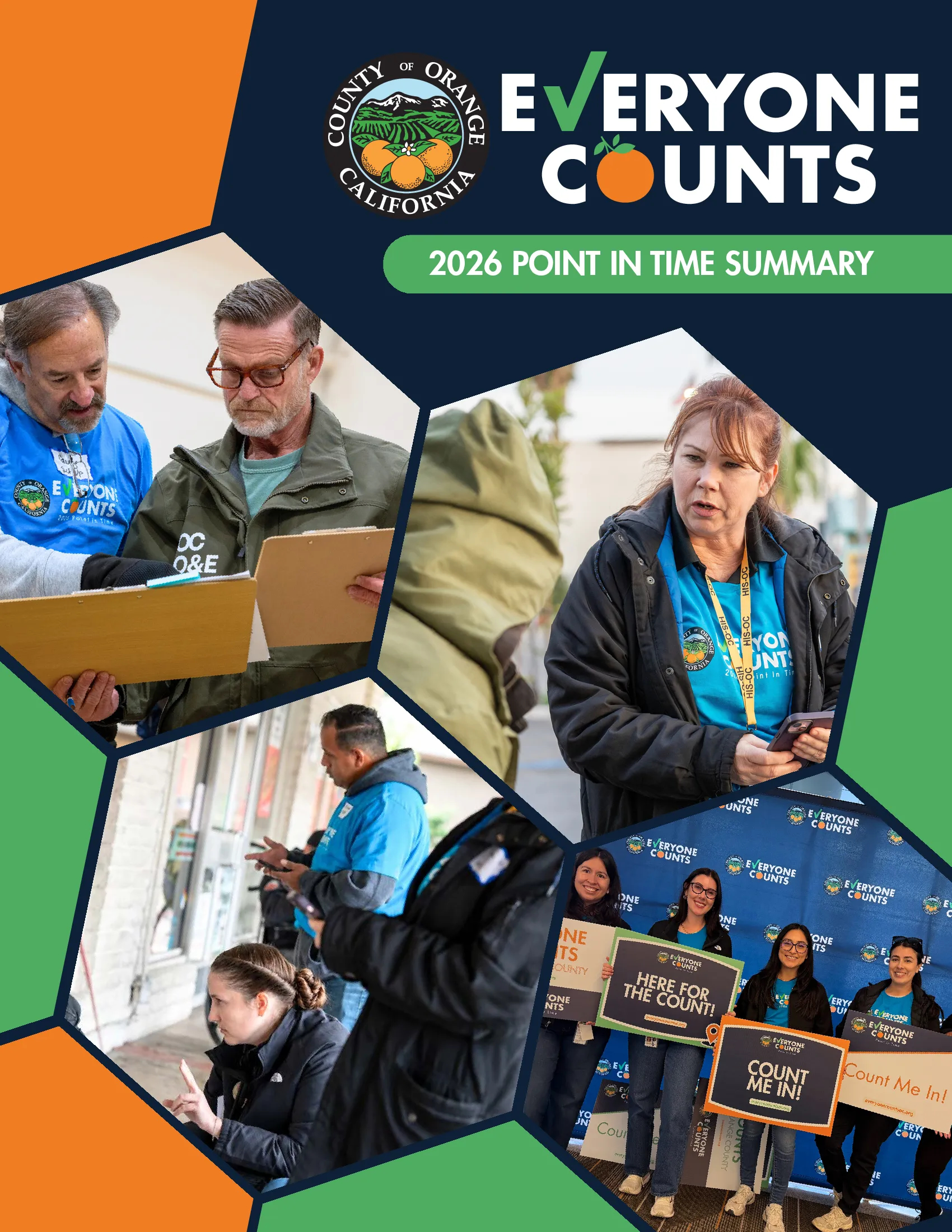
The County of Orange’s biennial Point in Time, or PIT, Count is conducted under guidelines from the U.S. Department of Housing and Urban Development. This year, 3,256 people were counted in emergency shelters or transitional housing programs and 3,065 were unsheltered. The sheltered count took place on the night of Jan. 26, while the county and Orange County Continuum of Care conducted the unsheltered count from Jan. 27 through Jan. 29 with support from more than 1,300 volunteers.
Schools, meanwhile, identify students throughout the academic year under the federal McKinney-Vento Homeless Assistance Act, which uses a broader definition of homelessness for educational purposes.
“The PIT count does not include families or individuals living doubled up, or living in motels unless paid for by a third party,” said Jeanne Awrey, coordinator of Student Programs and Services at the Orange County Department of Education. “Simply stated, the U.S. Department of Housing and Urban Development funds the PIT and the department’s definition differs from the McKinney-Vento homeless education definition.”
A different picture of student homelessness
Under McKinney-Vento, students may qualify if they lack a fixed, regular or adequate nighttime residence. That can include sharing housing with others because of economic hardship or loss of housing, staying in motels or shelters, or sleeping in cars, parks, beaches and other places not ordinarily used as housing.
OCDE data show that about 91 percent of those students were living in doubled-up, tripled-up or shared housing situations. About 4 percent were staying in shelters, nearly 4 percent were living in hotels or motels, and fewer than 2 percent were unsheltered.
One family currently being supported through a local school district illustrates how quickly those circumstances can change. Awrey said the family includes seven children, six of whom are elementary school age, along with a newborn. They have been moving from motel to motel and, on some nights, sleeping together in their vehicle.
The family’s frequent moves can also make it difficult for school staff to maintain contact and coordinate support, particularly as they cross city and school district boundaries. OCDE is withholding additional details to protect the family’s privacy.
That means student homelessness often looks different from the images that may first come to mind.
All schools are required to administer a housing questionnaire upon enrollment, Awrey said, giving families an opportunity to identify their nighttime residence. But she noted that families may choose not to disclose their circumstances.
Identifying students matters because housing instability can interfere with enrollment, attendance, transportation and participation in school.
“Identification is not simply about putting a label on a student. It is the doorway to educational rights, support and connection,” Awrey said.
Eligible students can receive protections that include immediate enrollment even when typical documents are unavailable, the ability to remain at their school of origin when appropriate, transportation assistance and access to meals, and other educational supports.
Helping schools remove barriers
Federal law requires every school district to designate a McKinney-Vento liaison to help identify and support students experiencing homelessness. Each of Orange County’s 28 school districts has a designated liaison, while OCDE’s ACCESS alternative education program has two. OCDE also works with charter schools throughout the county and supports their designated liaisons.

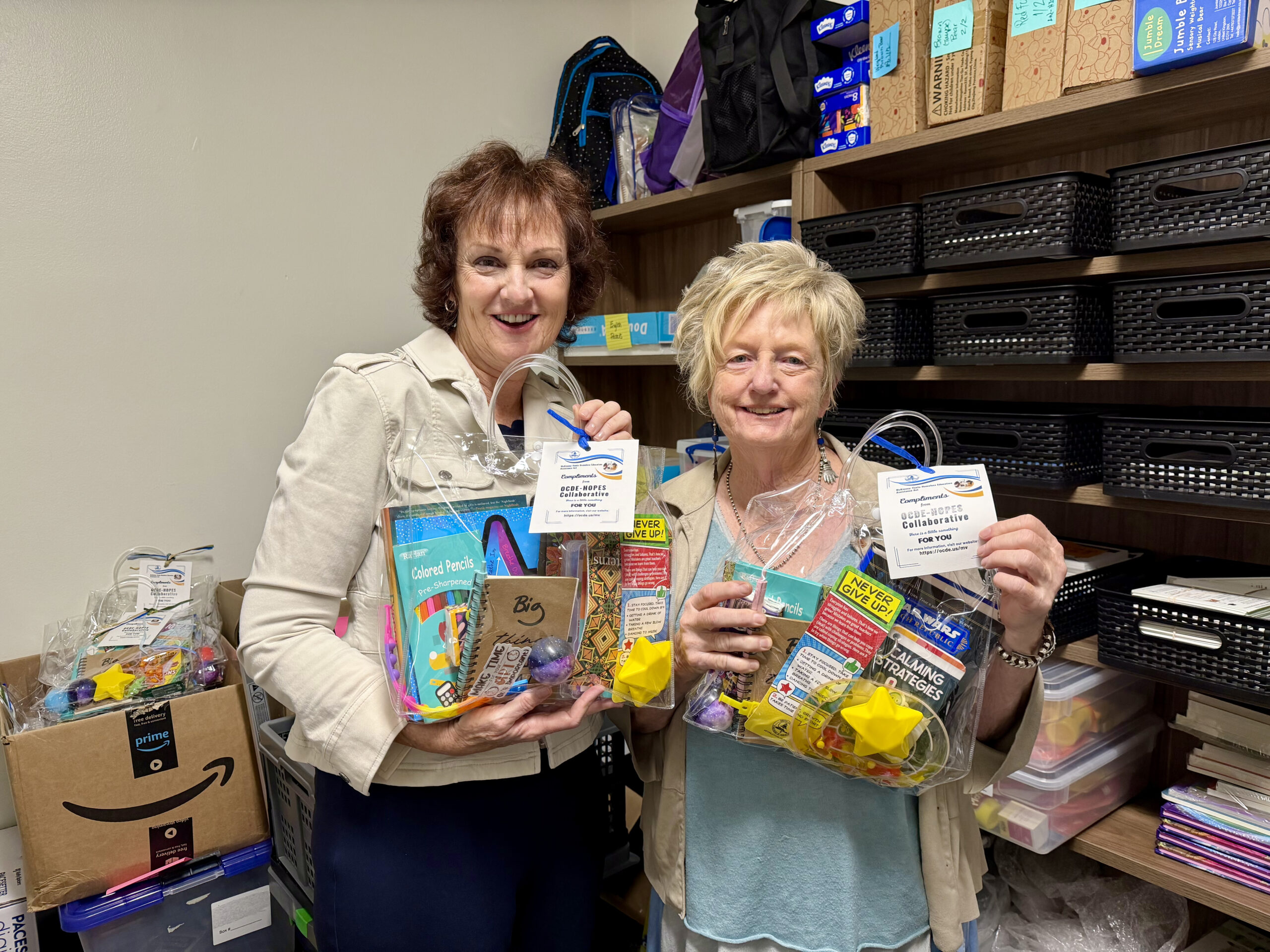
OCDE’s HOPES Collaborative, or Homeless Outreach Promoting Educational Success, works with those liaisons to help translate federal and state requirements into practical support for students and families.
The collaborative provides technical assistance, professional development, resources and individual consultation on issues ranging from enrollment and school selection to transportation, attendance and graduation requirements. It also connects schools with community organizations and other resources that can help address needs beyond the classroom.
Awrey said the work includes helping school employees recognize housing instability in the first place, so support does not rest solely with a district’s designated liaison.
And despite the challenges families face, she said the response she sees from educators and community organizations gives her reason for optimism.
“What gives me hope is seeing how many educators and community partners are willing to step forward when they understand what a student and family are experiencing,” Awrey said. “I see liaisons who are not simply checking a box for compliance. They are asking, ‘What does this student and their family need, and how can we remove the barriers to support the whole child and family?’”
For information about educational rights, training opportunities and resources for students and families experiencing housing instability, visit OCDE’s HOPES Collaborative webpage.