
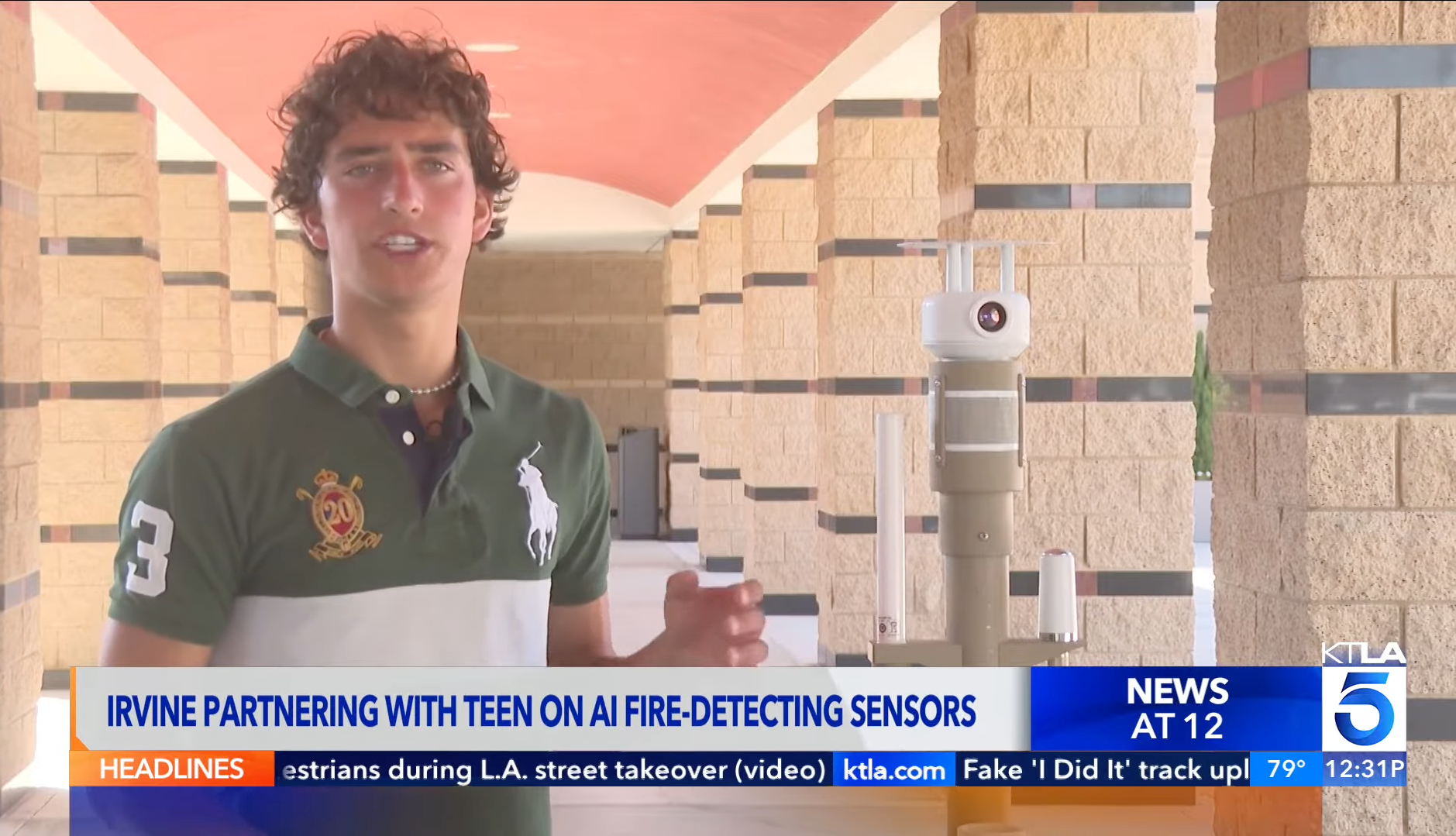
A wildfire detection system created by a Newport Harbor High School graduate is moving from pilot testing to a larger deployment, marking a new milestone for technology designed to help firefighters detect wildfires before they spread.
The City of Irvine recently announced it is expanding its partnership with SensoRy AI, the company founded by Ryan Honary, to install a network of early wildfire detection sensors throughout the Irvine Open Space Preserve. Installation is expected to begin in early 2027.
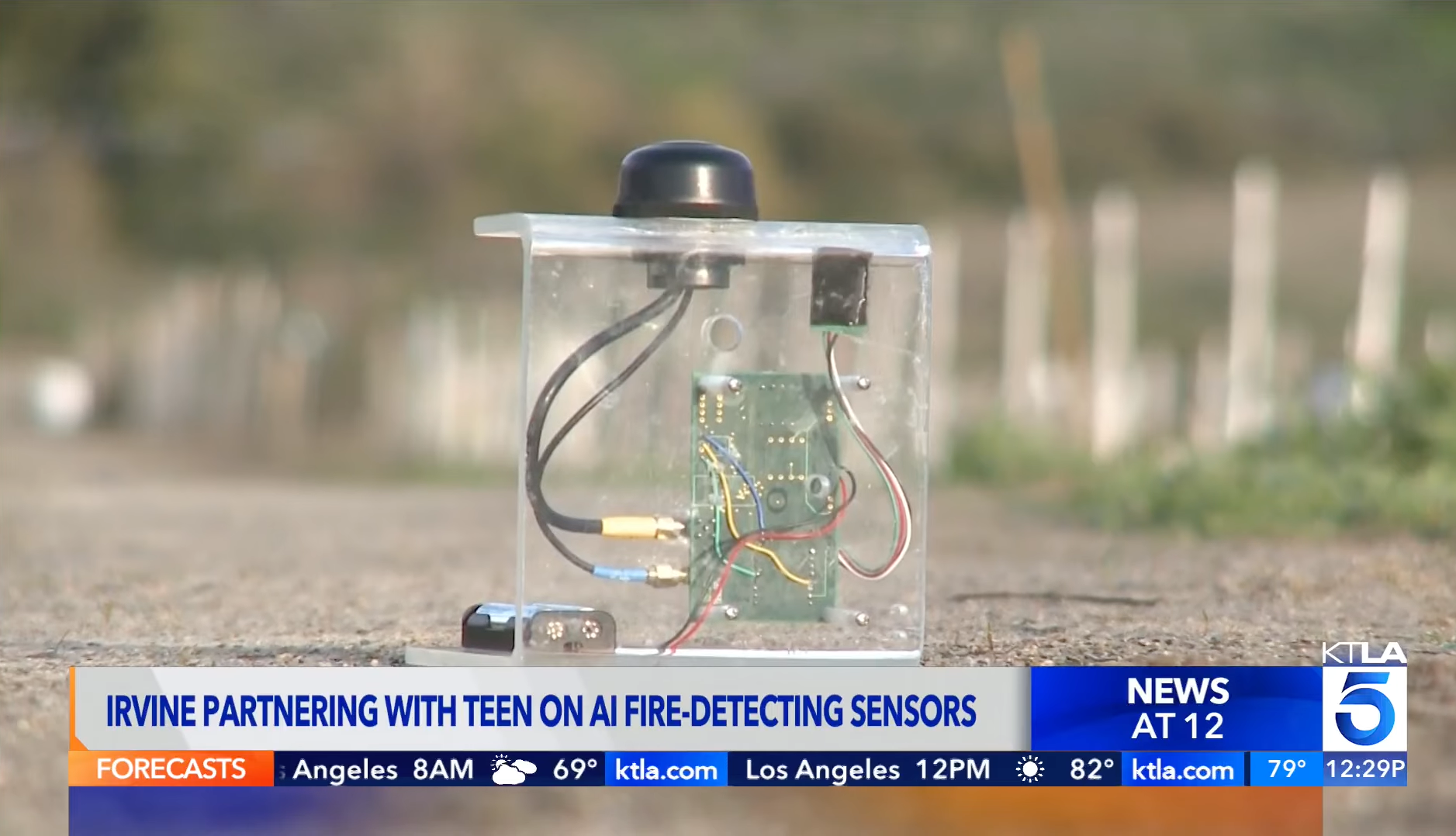
The expanded deployment follows a successful pilot conducted last year in partnership with the Orange County Fire Authority. According to the city, the technology detected a wildfire ignition from more than a mile away before it was reported by residents or identified by cameras.
Honary founded SensoRy AI while he was still in high school after setting out to develop technology that could help identify wildfire ignitions in their earliest stages. Since then, he has continued refining the system while partnering with local agencies to expand its use across Orange County.
“It’s definitely really exciting,” Honary told KTLA Orange County Bureau Chief Chip Yost. “We’ve done deployments before but they were all pilot deployments … so this being our first paid project is exciting.”
The city said the expanded deployment is supported through the funding from the California Department of Conservation’s Regional Forest and Fire Capacity Program, along with contributions from the City of Irvine and the Irvine Ranch Conservancy.
This fall, Honary will attend Stanford University as a Wildfire Fellow while remaining involved with SensoRy AI.
The OCDE Newsroom previously featured Honary’s work as a Newport-Mesa Unified School District student after he developed the artificial intelligence-powered system inspired by California’s devastating wildfires.
Here are the other stories we’ve been following this week:
- Two alumni of the OC Pathways Student Ambassador Network are returning to mentor the program’s newest class, sharing how the leadership experience helped shape their college and career paths.

- The Orange County Department of Education will host the AI Forward Summit on Aug. 3, bringing educators and technology leaders together to explore practical, responsible uses of artificial intelligence in schools and prepare students for an AI-driven workforce.
- Orange County school districts are implementing or updating student cellphone policies to comply with California’s new Phone-Free School Act, which requires limits on smartphone use during the school day.
- A new report finds that while most U.S. school districts teach civics in the classroom, far fewer provide students with hands-on opportunities to engage in civic participation or community service.
- Stanford University’s John W. Gardner Center for Youth and Their Communities has recognized Gilbert High School for its student-centered approach to alternative education, highlighting how civic engagement and real-world learning opportunities are helping students succeed.
- Huntington Beach student Phoebe Jin-Ngo is helping older adults build confidence with technology through her nonprofit, TechIQ for Seniors, which offers free workshops on digital skills, artificial intelligence and online safety.
- California education leaders and science advocates are pushing for greater investment in science instruction as science test scores become a permanent measure on the state’s school accountability dashboard, while a new student growth metric faces criticism from education groups.
- California will pilot two new, play-based language screening tools for transitional kindergarten students this school year to assess English proficiency using developmentally appropriate activities instead of the state’s previous assessment.
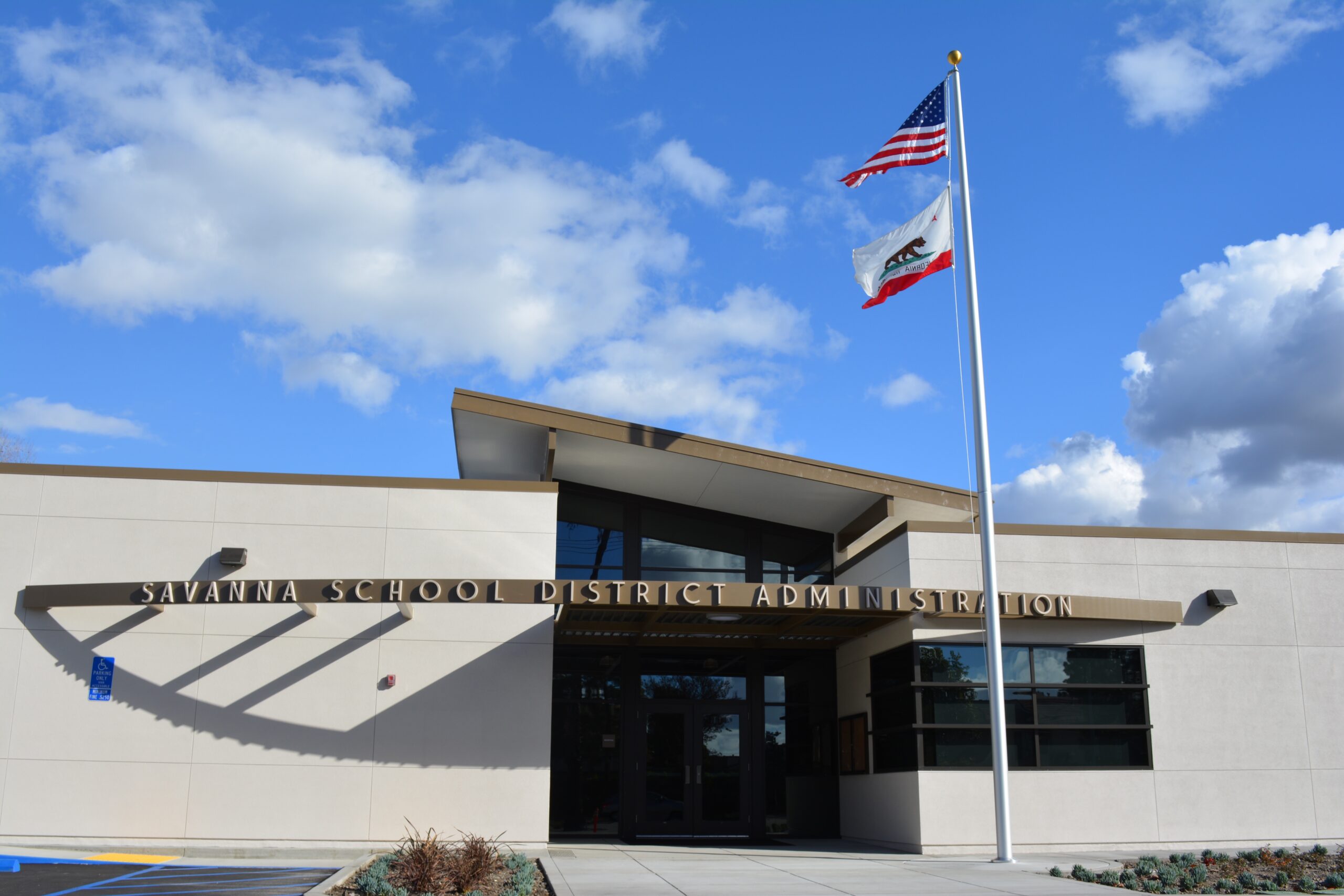
- Savanna School District has deployed a wearable emergency alert badge system across its four campuses, allowing staff to discreetly request assistance and helping administrators and first responders respond more quickly during emergencies.
- A new analysis estimates nearly 6 million California students would qualify for scholarships under a new federal education tax credit program, but the state has not opted into the initiative.
- Homeless services providers and officials say this year’s reported decline in family homelessness in Los Angeles may reflect limitations in how families are counted rather than an actual decrease in the number of families experiencing homelessness.
This is the part where we encourage you to keep up with local education news stories by bookmarking the OCDE Newsroom, subscribing for emailed updates and following us on Facebook, X (formerly Twitter) and Instagram.