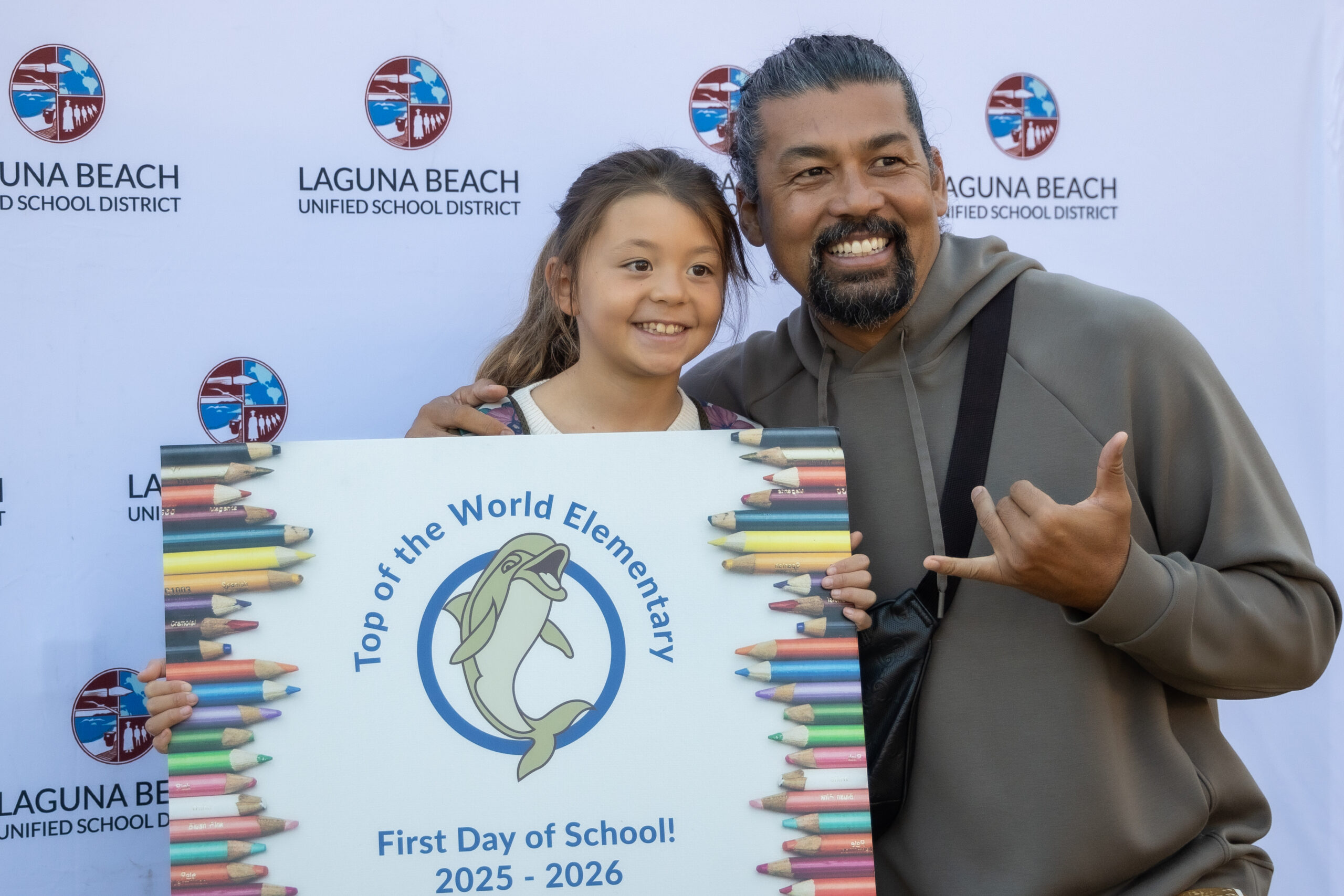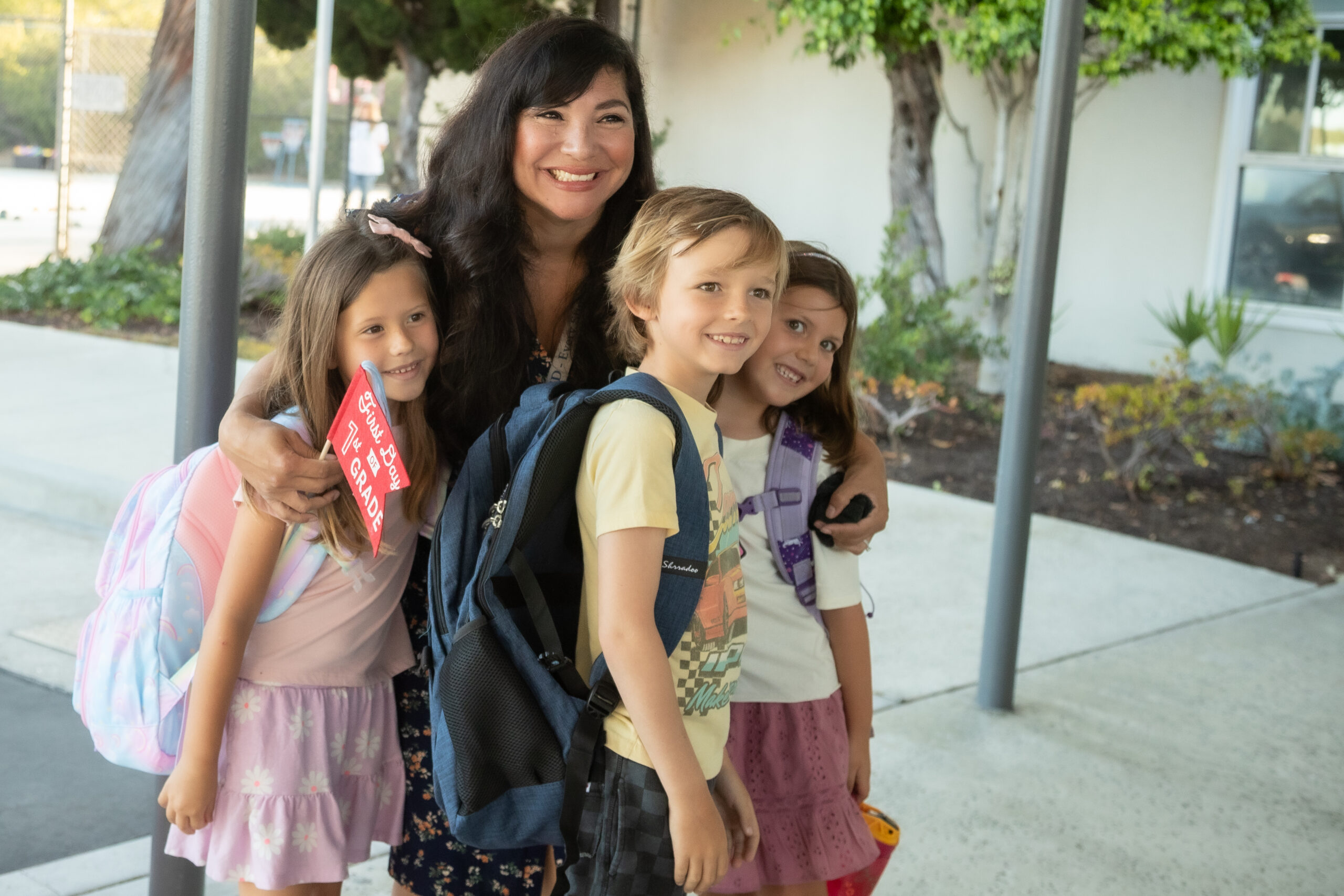
Quick look: Students across Orange County will begin returning to classrooms as soon as Aug. 6, starting with the Anaheim Elementary and Cypress school districts. Other OC campuses will reopen throughout August and into early September.
Backpacks are just about ready to be filled, and so are classrooms as a new school year kicks off across Orange County.
The Anaheim Elementary and Cypress school districts will be the first to welcome back students — this week! — officially kicking off the 2026–27 academic year on Thursday, Aug. 6.

The Savanna, Fullerton, Fullerton Joint Union, Santa Ana Unified and Garden Grove Unified school districts will follow on Aug. 10, with additional waves of campuses reopening throughout August and into early September. Families are encouraged to check their local schools’ websites to confirm start dates, as calendars vary by district and school.
While students are focused on getting to know new teachers, classmates and routines, district leaders have another important assignment: planning for the future. Local schools and districts continue to respond to shifting enrollment patterns while making the most of new state investments designed to strengthen public education.
“Every school year brings new opportunities and new challenges, but our focus remains the same: helping every student succeed,” County Superintendent Dr. Stefan Bean said. “Our schools have always adapted to meet the needs of their communities, and we’re grateful for the educators, staff and families who make that possible every day. Together, we’re building on that foundation as we prepare students for success in school and in life.”
School calendars vary
While a handful of year-round schools and charter schools have already welcomed students back — like Los Alamitos’ Weaver Elementary, which returned on July 29 — most schools and districts will ring the first bell between early August and early September.
Among the latest to return are the Huntington Beach City School District (Sept. 1) and the Huntington Beach Union High School District (Sept. 2). But they’re still back in session before Labor Day.
Although start and end dates vary, all California school districts will provide at least 180 instructional days this year. So later starts generally correspond with later finishes.
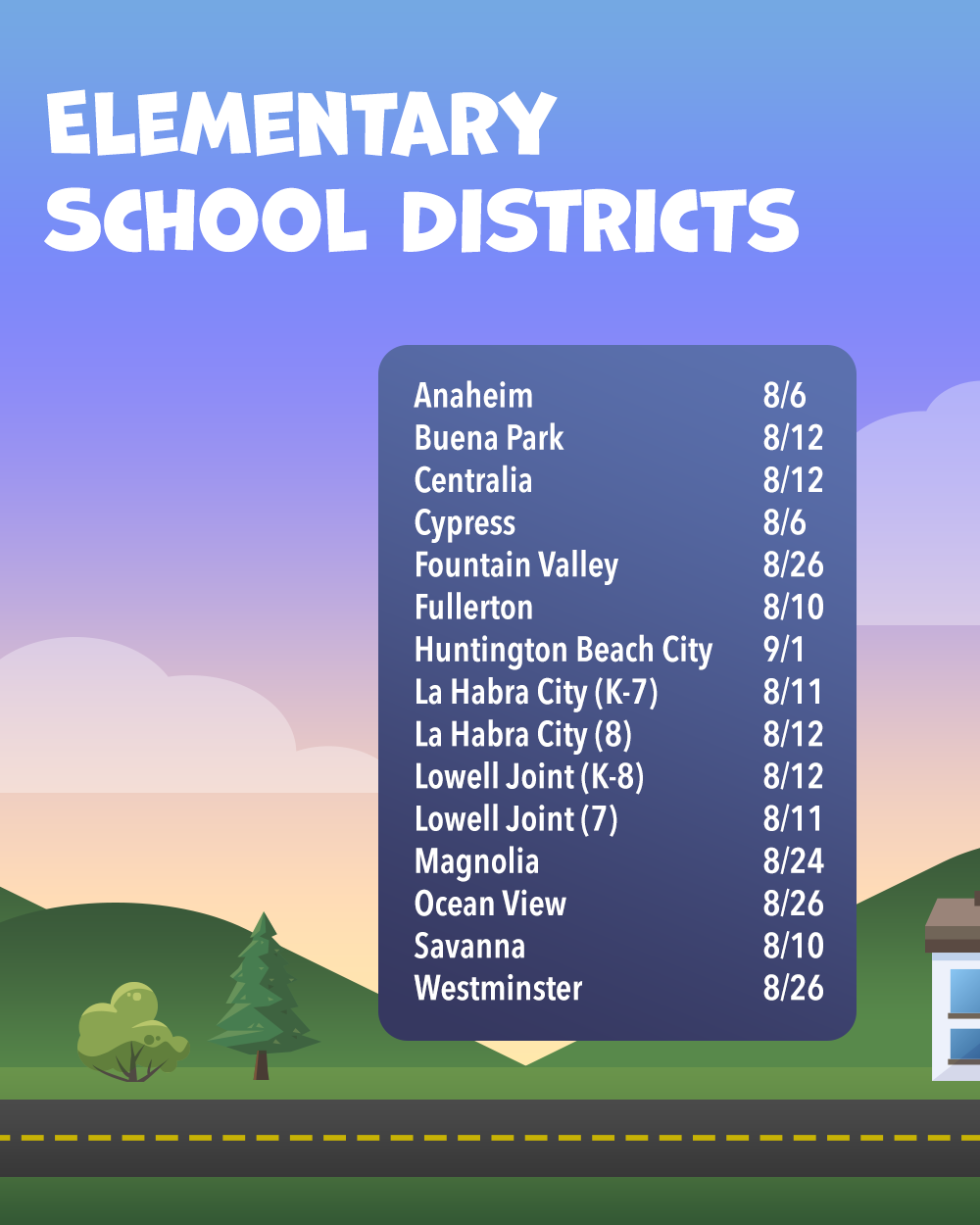
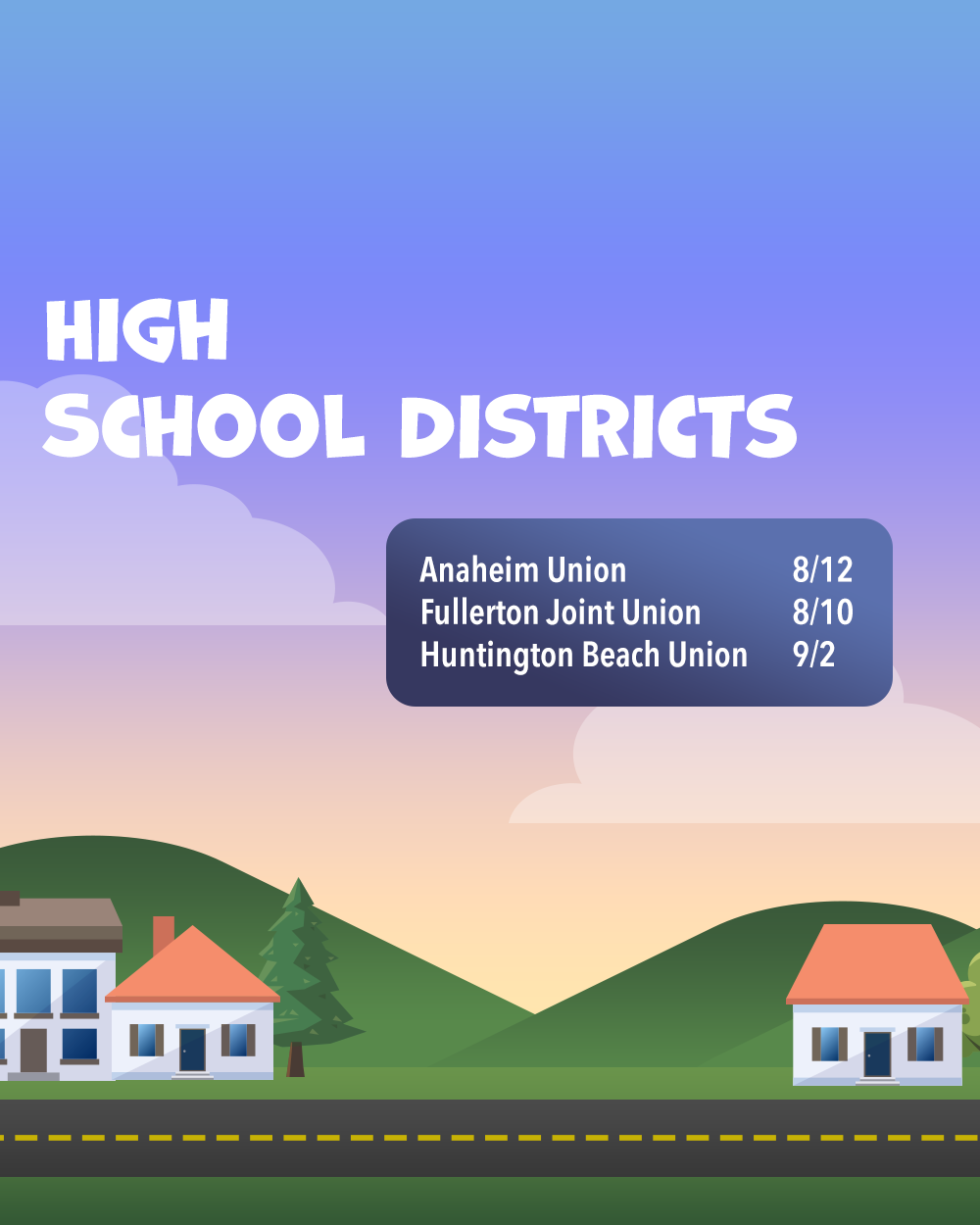
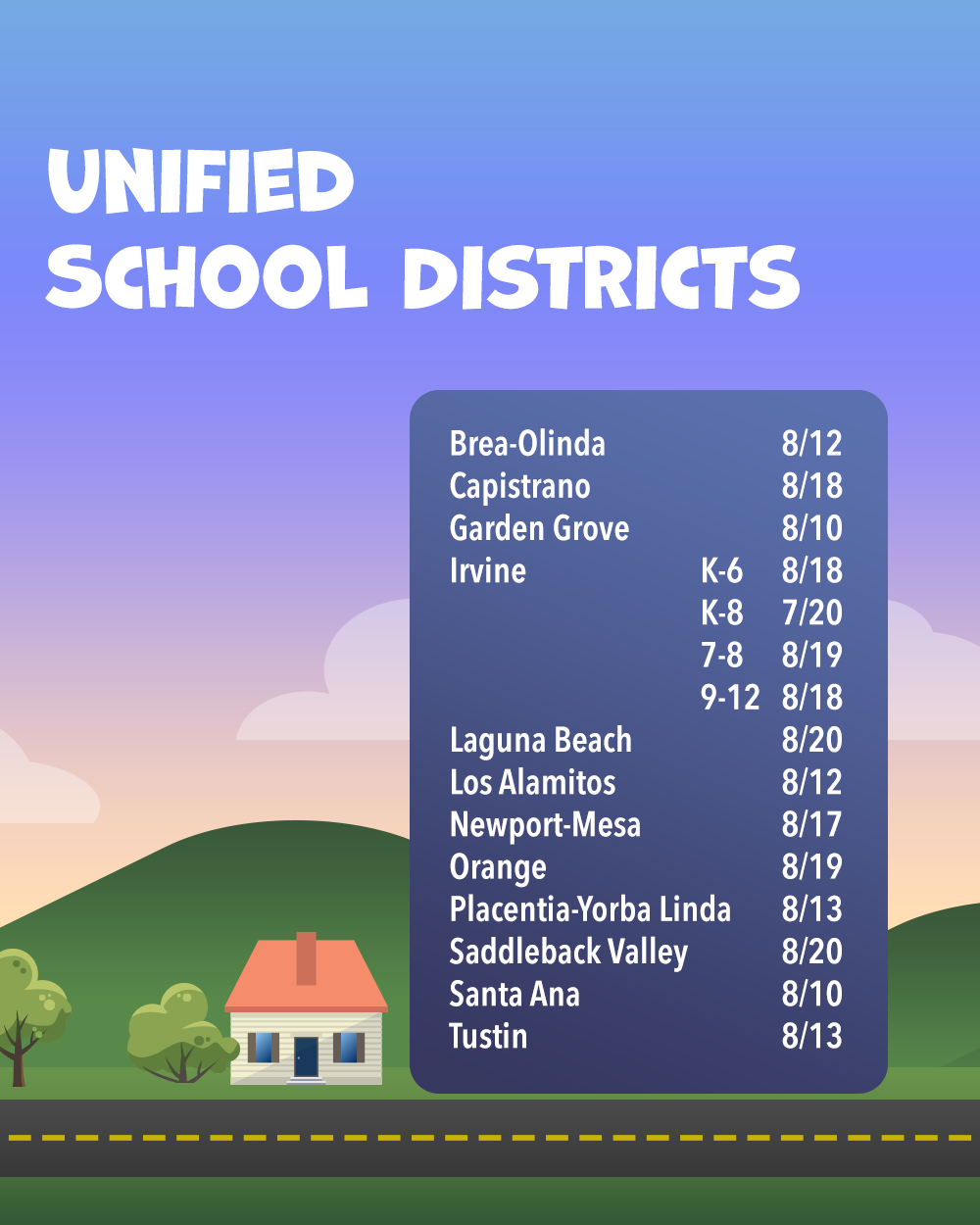
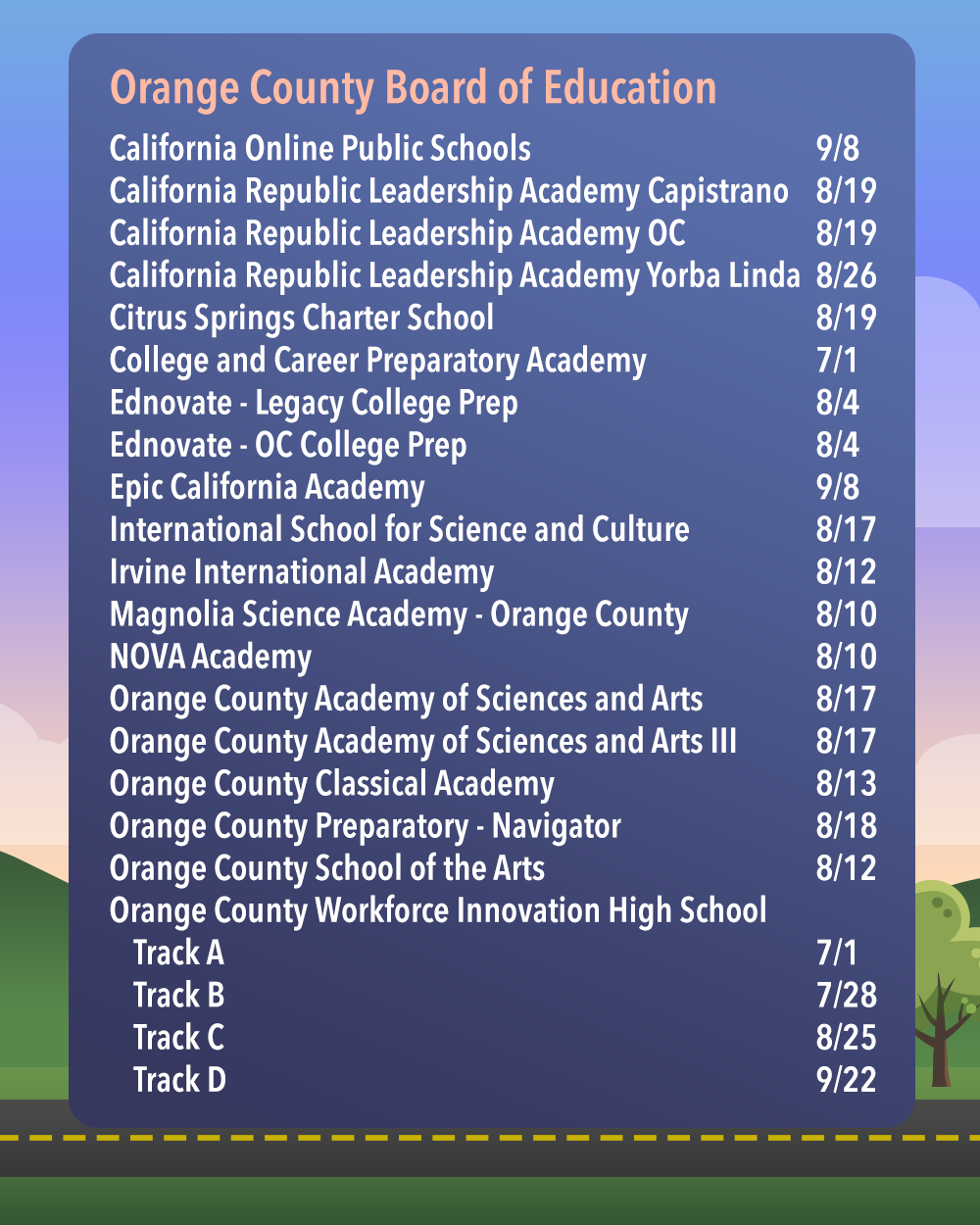
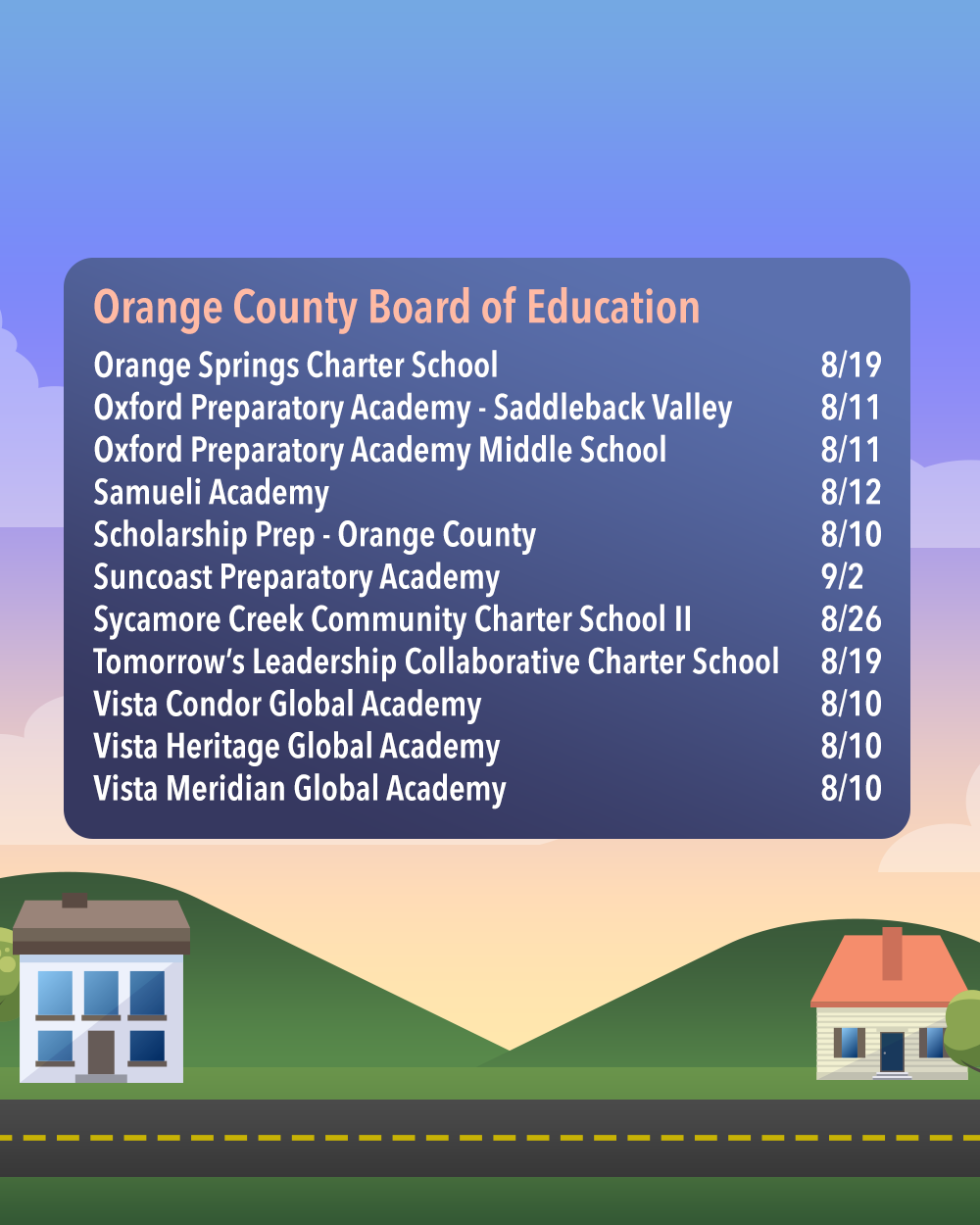
Wondering when school starts? Browse the slideshow above to find the first day of classes for Orange County school districts and charter schools authorized by the Orange County Board of Education.
Enrollment trends continue
Orange County public school enrollment totaled 422,351 students during the 2025–26 school year.
That’s down about 14 percent from a decade earlier, when enrollment stood at 493,030 students. And it’s down approximately 7,500 students — or 1.7 percent — from 2024-25.
Education officials expect enrollment to continue gradually declining, reflecting long-term demographic trends affecting not just our state but many other parts of the country. In California, the shifts have been driven largely by lower birth rates, high housing costs and changing population patterns.
There is one exception. Enrollment in transitional kindergarten continues to grow as California expands access to younger learners, introducing more children to school at an earlier age.
State budget approved
California’s 2026–27 state budget provides a record $128.1 billion Proposition 98 guarantee for TK–12 schools and community colleges, including a 4.31 percent increase to the Local Control Funding Formula or LCFF, which is the state’s primary funding source for public schools.
The latter increase combines the state’s annual cost-of-living adjustment with an additional discretionary increase, providing districts with flexible funding to help address rising operating costs.
The state spending plan also includes a $2.4 billion ongoing investment in special education, a $5 billion one-time Student Support and Professional Development Block Grant, and continued funding for community schools, expanded learning and literacy initiatives.
As enrollment patterns continue to shift, long-term financial planning remains especially important because school funding is closely tied to student attendance. OCDE works alongside Orange County’s 28 school districts by reviewing budgets, monitoring fiscal conditions and providing technical assistance that helps districts plan ahead while maintaining strong educational programs.
5-3-1 Strategic Plan
Meanwhile, OCDE’s 5-3-1 Strategic Plan will continue to guide the department’s work with districts, educators and community partners.
The framework centers on five key initiatives — things like making schools safer, integrating AI and enhancing career technical education — along with three support objectives and the overarching goal of improving outcomes for students served directly through OCDE’s alternative and special education programs.
This year, OCDE is building on these efforts while tracking key indicators to ensure initiatives are producing meaningful results.
“Our 5-3-1 Strategic Plan is about more than setting goals,” said Dr. Bean, the county superintendent. “It’s about making a lasting difference for students. As we continue this work, we’ll keep listening, learning and measuring our progress so we can strengthen our partnerships, celebrate what’s working and create even more opportunities for students to succeed.”