
A few taps and swipes on a social media app can quickly shape what a student sees online — including content related to drugs, alcohol and nicotine.
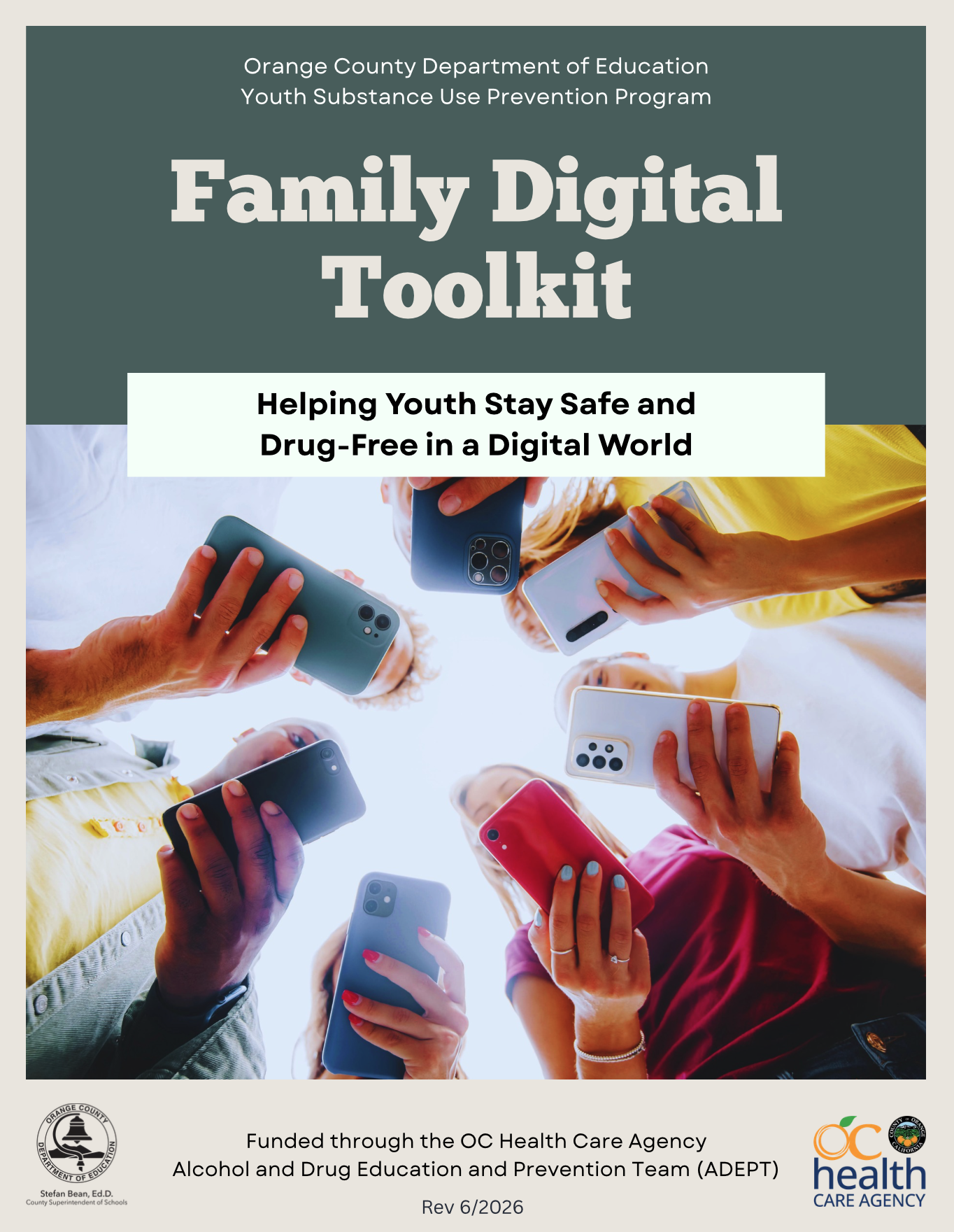
That’s why OCDE’s Youth Substance Use Prevention team developed a Family Digital Literacy Toolkit to help parents stay informed about the latest substance use trends and learn how to limit drug-related content on social media.
Doing so starts with understanding how social media algorithms work. By tracking what users watch and interact with, these algorithms are incredibly effective at identifying the types of content people want to see. Sometimes, however, the recommendations can go a little too far.
Drug-related content can find its way onto a student’s feed after something as innocent as a search for medication information or workout supplements. One suggested post leads to another, and before long, students may begin seeing posts for nicotine products, local marijuana dispensaries or other substance-related content.
What makes this especially concerning is how casually that content is often presented. When drug, alcohol and nicotine use appears alongside everyday posts and videos, it can make potentially harmful behaviors seem normal or harmless. For students who do not fully understand the risks associated with substance use, that exposure can increase the likelihood of experimentation.
So how can parents help prevent this?
The Family Digital Literacy Toolkit includes step-by-step videos that walk parents through safety settings and content controls on Instagram and TikTok. These tools help keep drug-, alcohol- and nicotine-related content as far away from students as possible
“As a parent, I am both excited and worried as I watch my son grow up in a digital world,” said Stephan Lambert, OCDE’s coordinator of Prevention Education. “It can be hard to keep up with social media, and I hope this toolkit empowers parents and caregivers to take action and start a conversation with their kids.”
The toolkit also helps families stay informed about current substance use trends. Parents can learn about commonly used substances, their side effects and the slang terms and emojis often used to reference them online. The resource also provides guidance on how families can build trust and establish boundaries through supportive conversations.
To learn more about how to keep students safe, visit the Youth Substance Use Prevention Services homepage, or contact Stephan Lambert at slambert@ocde.us.