
Quick look: California’s latest budget proposal brought good news for schools, with higher revenues potentially boosting education funding and proposed investments in special education. But enrollment declines and long-term fiscal uncertainty will require continued careful planning in the years ahead.
Stronger-than-expected state revenues have improved California’s education funding picture for the next fiscal year, but challenges still loom on the horizon.
During a presentation to the Orange County Board of Education on Wednesday, June 3, OCDE Associate Superintendent for Administrative Services David Giordano reviewed the state’s latest budget outlook alongside OCDE’s preliminary spending plan for the coming fiscal year.
The update came three weeks after Gov. Gavin Newsom unveiled his latest state budget preview, known as the May Revision, which reflected higher-than-anticipated tax revenues and the prospect of increased funding for TK-12 education.
According to Giordano, much of the improvement stems from personal income tax, corporate tax and sales tax collections, which together are projected to generate billions more in revenue for the state than previously anticipated. Investment activity tied to the rapidly growing artificial intelligence sector was cited as a major driver.
Among the highlights from Wednesday’s presentation:
- The state’s Proposition 98 education funding guarantee is projected to increase by $6.4 billion over a three-year period.
- Schools would receive a 2.87 percent cost-of-living adjustment under the governor’s proposal.
- California is proposing an additional $2.4 billion in ongoing funding for special education statewide.
- A proposed one-time discretionary grant would provide additional funding for local educational agencies, though details remain under discussion.
For OCDE, the proposed special education investment could translate into approximately $1.8 million in additional ongoing funding if approved as part of the final state budget, which takes effect on July 1.
While the ledger has improved since January, Giordano noted that California continues to face longer-term fiscal headwinds, including projected budget deficits in future years and uncertainty tied to economic conditions, inflation and federal policy changes.
Solid financial footing
OCDE provides direct educational services and support for some of the county’s most vulnerable student populations through its alternative and special education programs. Guided by its 5-3-1 Strategic Plan, the department also supports local districts through services ranging from professional development and technology infrastructure to payroll, legal guidance and student enrichment programs.
For the 2026-27 fiscal year, OCDE’s preliminary budget projects approximately $362 million in revenue against $387 million in expenditures. That projected gap is driven in part by planned, one-time expenditures, including costs associated with rebuilding Rancho Soñado, OCDE’s 110-acre environmental education center, following the 2020 Bond Fire.
Despite the projected shortfall, Giordano said OCDE remains on solid footing.
“So we’re projecting to close out the year in very good financial position heading into 2026-27,” he told board members.
A proactive approach
At the same time, Giordano noted that declining student attendance continues to affect future funding projections. While state funding rates have increased, those increases are not keeping pace with enrollment-related declines.
“The COLAs are just not enough to offset the declines in ADA,” he said.
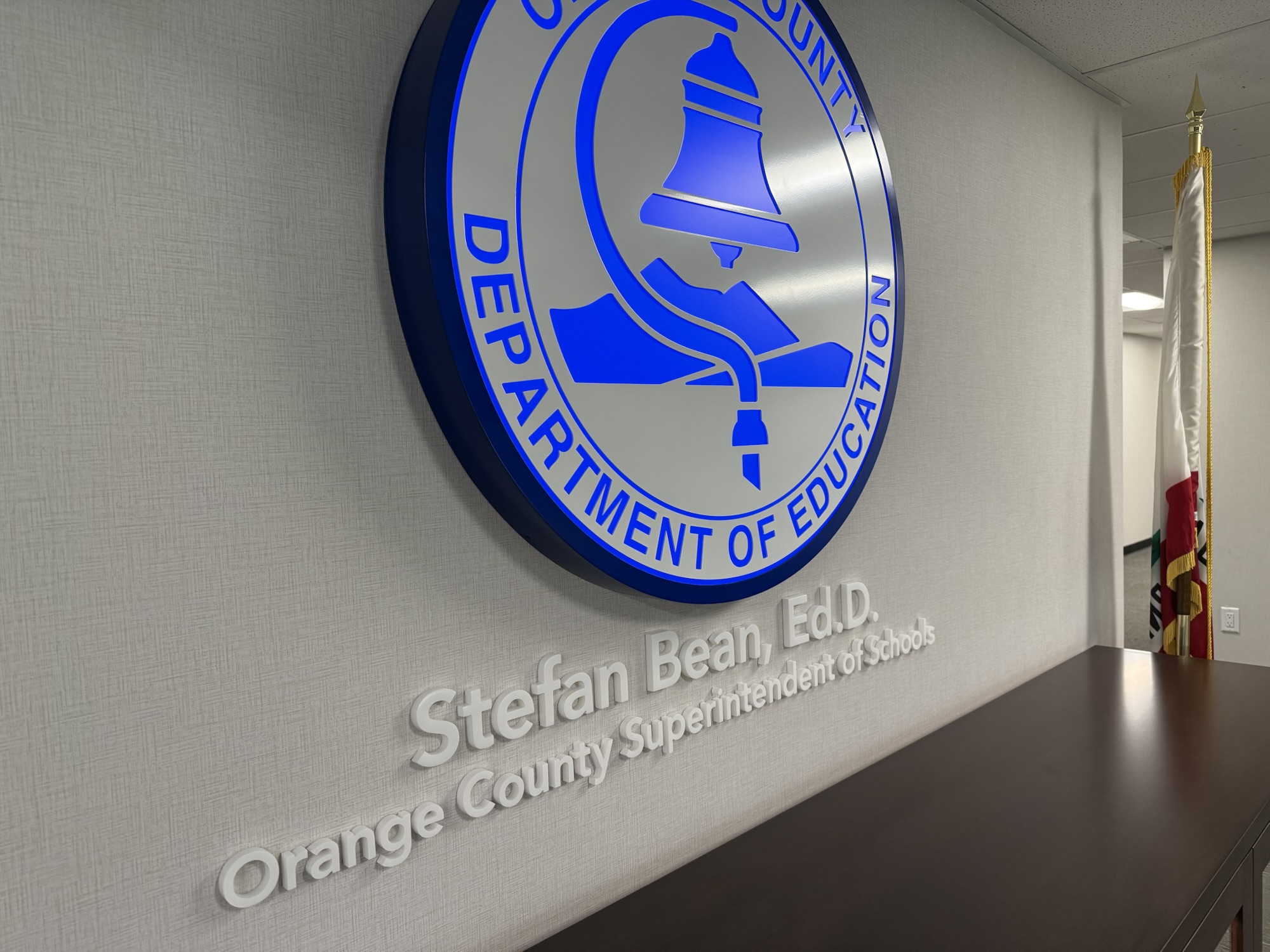
Dr. Stefan Bean, the county superintendent, told the board that OCDE continues to take a proactive approach to long-term fiscal planning, including managing vacancies through attrition, carefully reviewing new positions and evaluating program effectiveness to help align future spending with revenues while minimizing impacts on current employees.
Many details of the state’s spending plan remain subject to final budget negotiations. State lawmakers are expected to finalize California’s budget later this month, and OCDE will continue refining its projections as additional information becomes available.
The Orange County Board of Education is expected to consider adoption of the department’s budget on June 17.