
Quick look: On the latest FutureCurrent podcast, Segerstrom Center for the Arts President and CEO Casey Reitz discusses how the performing arts helps students build confidence, find belonging and develop a stronger sense of what’s possible.
For students, the performing arts are about more than just what happens on stage. They shape confidence, connection and even a sense of what’s possible.
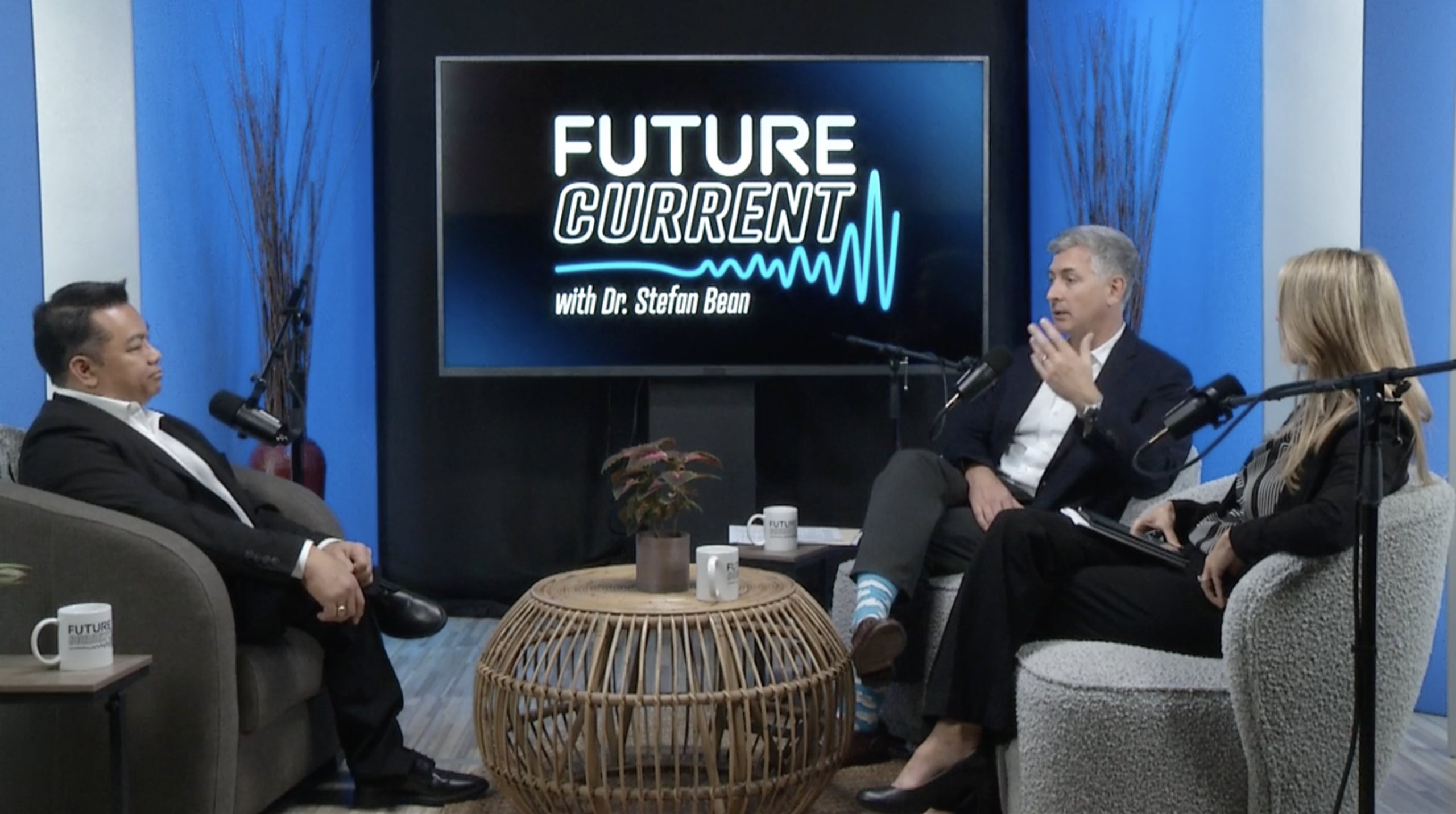
In the latest episode of FutureCurrent, Segerstrom Center for the Arts President and CEO Casey Reitz joins County Superintendent of Schools Dr. Stefan Bean and educator Lainie Rowell to explore how early access to the arts can influence how young people see themselves and their future.
Bean opens the conversation by emphasizing the importance of strengthening connections between education and the arts. Reitz builds on that idea, reflecting on how his own experiences in school arts programs helped shape his path — even after he realized performing was not the right fit.
“I still wanted to be around it,” he says. “It had changed my life, and I wanted to be a part of it changing other people’s lives.”
Reitz now brings that perspective to his current role leading one of the region’s largest arts organizations. Before joining Segerstrom Center, he was nominated for multiple Tony Awards and won as a producer.
Beyond the stage
These days, he advocates for expanding how students understand the possibilities of the arts.
Reitz noted that young people often see only a narrow set of options, like performing on stage. In reality, the arts offer a wide range of benefits and an array of career pathways — from technical production and design to marketing, fundraising and leadership roles.
“When I was a kid doing it in high school … I thought the only things you could do in theater were either be on stage or be the person that hung the lights,” he said. “I thought that’s all there was.”
His perspective began to shift in college, which revealed numerous ways people contribute beyond performing. A broader understanding can similarly help students stay connected to creative work, even as their interests evolve.
But the timing of that exposure is critical. Reitz said students who are not introduced to the arts early may feel those spaces are not meant for them. His outreach efforts are designed to reach students at a younger age and in more communities.
“We’re looking to where kids don’t have the resources in whatever schooling they have at that age,” Reitz said, describing efforts that include low-cost tickets, transportation support and in-school programming.
Summer at the Center
Beyond skills or career pathways, there’s the more personal impact of the arts.
One example is Summer at the Center, a long-running partnership between the Orange County Department of Education and the Segerstrom Center. Students from OCDE’s alternative education program, or ACCESS, spend two weeks learning music, dance and performance before taking the stage for a live show.
Reitz described how students often arrive hesitant or withdrawn, but they leave with new confidence, relationships and a stronger sense of identity. At the heart of that transformation is something simple but powerful: being seen.
“Just being seen is significant,” he said, describing how attention, encouragement and a sense of belonging can change how students engage with the world around them.
Bean noted that those kinds of experiences can give students a renewed sense of direction and optimism.
A lasting impact
Throughout the episode, Reitz drew parallels between the arts and athletics, noting how both promote teamwork, discipline and resilience.
But unlike sports, he said, the arts offer multiple entry points for students with a wide range of strengths and interests, allowing more young people to participate and benefit.
Whether students pursue the arts professionally or engage as participants — or audience members, for that matter — those experiences can have a lasting impact.
“There are several benefits emotionally, mentally, physically, but one of the biggest ones is that it gives you hope for a better future,” he said.
FutureCurrent is produced by the Orange County Department of Education and features unscripted, story-driven conversations with educators and community leaders across Orange County. Episodes are available in both audio and video formats on major podcast platforms and YouTube.