
Quick look: The annual Conditions of Children report brings together key measures of child and teen well-being in Orange County. Its education section tracks progress from kindergarten readiness through high school and shows local graduates continue to outpace the statewide average in college readiness.
More than half of Orange County high school graduates completed the coursework required to apply to the University of California or California State University systems, outpacing the statewide average.
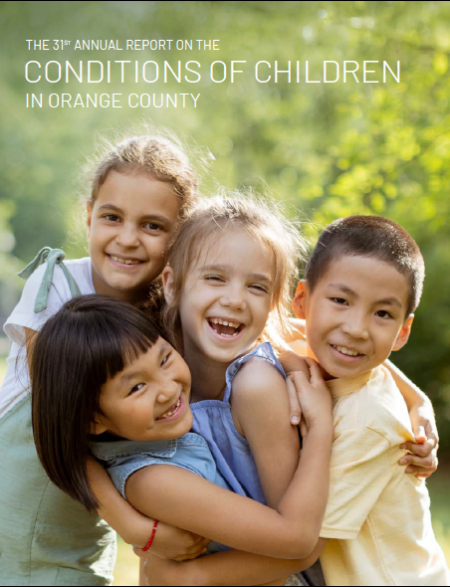
That finding is part of the 2025 Conditions of Children in Orange County report, produced by the county’s Social Services Agency and approved this week by the Board of Supervisors. The annual document examines key measures of well-being for children and teens, including education indicators that track student progress from early learning through high school graduation and college readiness.
Other sections examine areas like behavioral health, economic stability, nutrition, child care access and housing.
College readiness is defined in the report as completion of the UC/CSU A-G course requirements. In the 2023-24 school year, Orange County had 36,555 high school graduates, of whom 57.3 percent were UC/CSU eligible, compared with 51.9 percent statewide.
Eligibility rates varied across student groups. Asian students had the highest proportion of graduates who were UC/CSU eligible at 82.8 percent, followed by Filipino students at 72.9 percent, multiracial students at 68.0 percent and White students at 64.7 percent. Lower eligibility rates were reported among Hispanic or Latino students (42.9 percent), Black or African American students (42.7 percent), Pacific Islander students (42.9 percent) and American Indian or Alaska Native students (54.7 percent).
Hispanic or Latino students comprised the largest share of Orange County graduates, representing 48.5 percent of the graduating class. While more than 7,500 Hispanic or Latino graduates completed UC/CSU course requirements, the data highlights the need for continued focus on equitable access to college-preparatory coursework.
Graduation and dropout rates
Orange County continues to report strong high school completion outcomes. In 2023-24, 36,355 of 39,606 students graduated, representing a graduation rate of almost 92 percent.
The county’s high school dropout rate was 4.9 percent, lower than both the California rate of 8.9 percent and the national public school dropout rate of 5.3 percent. After declining during the early pandemic years, however, dropout rates have gradually increased and now sit near pre-pandemic levels.
Early learning indicators
At the start of the educational pipeline, 53 percent of Orange County children were considered developmentally ready for kindergarten in 2025, an increase from both 2015 and 2022.
Kindergarten readiness is measured using the Early Development Index, which assesses children across five developmental areas. While four areas improved over the past decade, emotional maturity declined by a little more than 3 percentage points, making it the only area to show a decrease.
Third-grade performance
The report shows that 57.1 percent of Orange County third-grade students met or exceeded state standards in mathematics in 2023-24, compared with 45.6 percent statewide. In English language arts, 52.7 percent met or exceeded standards, higher than the state rate of 42.8 percent. (More recent assessment results released in October show continued gains in Orange County, with 59 percent meeting or exceeding standards in ELA and 49 percent in math.)
Although overall performance exceeded state averages, the data shows continued gaps between socioeconomically disadvantaged students and their peers, alongside notable gains over time.
Chronic absenteeism down
Chronic absenteeism continues to influence outcomes across grade levels. In 2023-24, 15.2 percent of Orange County students were chronically absent, down from 19.2 percent the previous year and lower than the statewide rate of 20.4 percent.
Kindergarten students experienced the highest rates of chronic absenteeism at 20.7 percent, followed by high school students at 18.8 percent. Higher absenteeism rates were also reported among students participating in foster youth, homelessness, English learner and special education programs.
A countywide snapshot
Many of the education indicators highlighted in the Conditions of Children report were published previously in other public sources. Taken together, they provide a fuller view of the conditions that are shaping childhood in Orange County and a broad snapshot of progress over time.
The 31st annual Report on the Conditions of Children in Orange County can be found on the Orange County Social Services Agency website.