

Quick look: Education and community leaders gathered for the Orange County State of Education as County Superintendent Dr. Stefan Bean highlighted progress in areas like graduation rates, attendance and career pathways. Bean further emphasized partnerships and aligned systems to help every student succeed.
Graduation rates are at a record high. Chronic absenteeism is declining. And more middle and high school students than ever are enrolled in career pathways.
But challenges remain — including literacy gaps, rising student needs and the ongoing work of aligning systems so every student can succeed.
Those themes framed the Orange County State of Education, a countywide gathering that brought together about 400 education, government and community leaders on Friday to examine the latest data on student outcomes and to discuss how schools and communities can continue working together in support of Orange County’s nearly 430,000 students.
Hosted by the Orange County Department of Education, the event featured a keynote presentation from County Superintendent of Schools Dr. Stefan Bean, along with remarks from special guest Adán Correa, a Santa Ana High School graduate and advocate for the neurodivergent community who has appeared on the Netflix series “Love on the Spectrum.”
Leaders in attendance included school board trustees and superintendents representing the county’s 28 school districts, Orange County supervisors, state legislators, members of Congress and their representatives, along with scores of higher education, business and community partners.
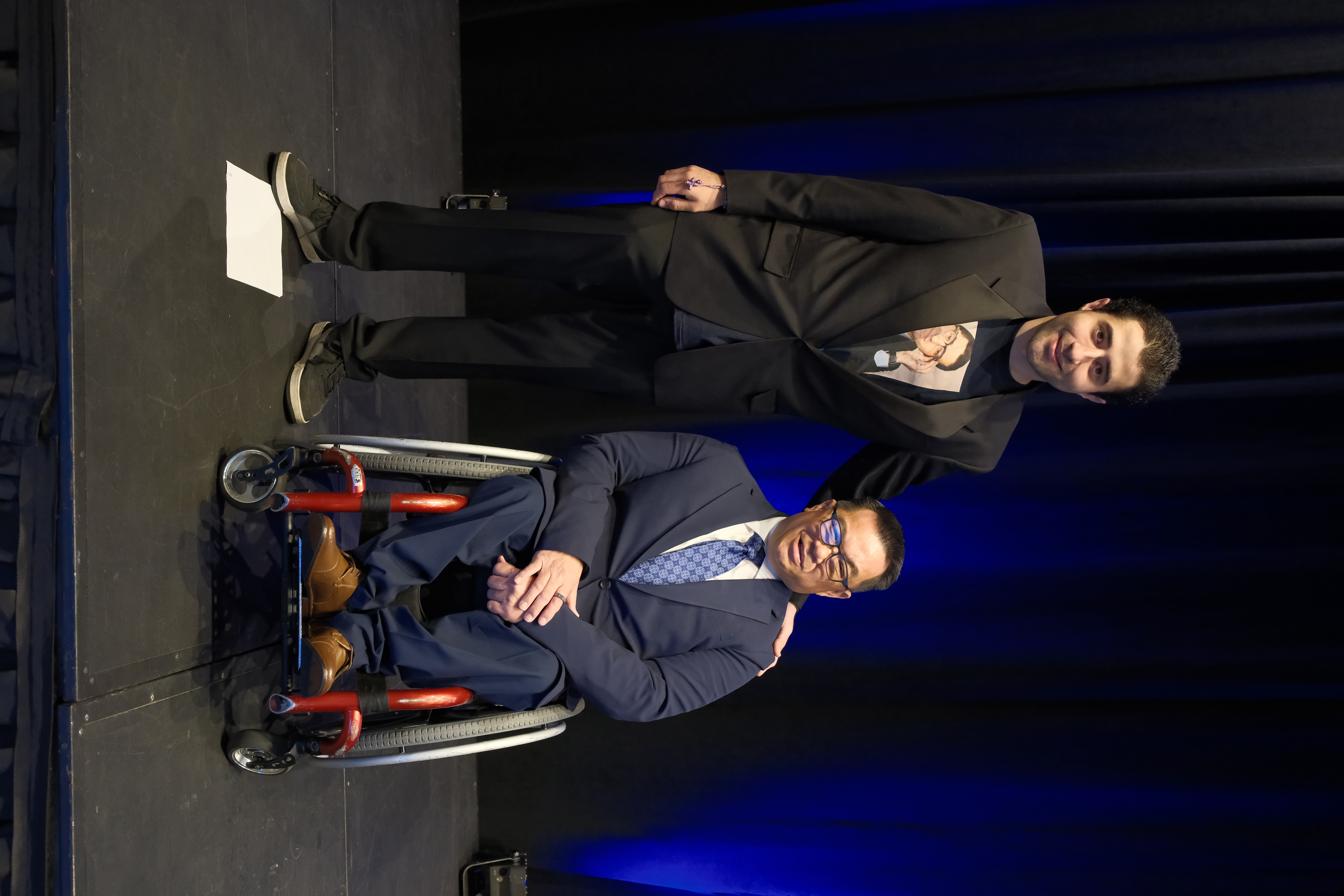
Throughout his 45-minute address, Bean emphasized a message that threaded through the data and the personal stories shared during the event.
“No one gets there alone,” he said repeatedly.
That sentiment was similarly reflected by Correa, who described how educators helped him navigate challenges while growing up on the autism spectrum. In a presentation that was both heartfelt and humorous, the Cal State Fullerton grad — he referred to his alma mater as “the Harvard of the West Coast” — credited teachers, coaches and mentors who encouraged him to pursue his interests and continue pushing forward.
“I know that you don’t hear it enough,” he said. “Yes, you made a difference in my life. Yes, you’re making a big difference in the lives of many students. And I encourage you to keep making that difference.”
Appearing on stage afterward, Bean said Correa’s story illustrates a broader truth: Student success hinges on the encouragement and support of others.
“Those of you who have heard me speak before know how often I talk about the people who lifted me,” he said.
“I was lifted off the streets of Saigon and brought to the United States. I was lifted by foster care. And as a student, I was literally lifted to the second floor of a school because there was no elevator,” Bean said.
“So yes, today we will talk about data. We will talk about programs. But beneath all of it is one simple truth: No one gets there alone.”
Complexities increasing
Bean then turned to the broader picture of education across Orange County.
Schools throughout the county now serve roughly 430,000 students across 28 school districts and more than 650 schools, with students speaking nearly 100 different languages.
Over the past decade, enrollment has declined by about 13 percent, often attributed to the high cost of housing and lower birth rates. But the needs of the students who remain in our county are growing more complex. Schools, he said, are serving increasing numbers of students experiencing homelessness, foster care youth and students with disabilities — realities that often require additional layers of support.
“So while the number of students has gone down,” Bean said, “the complexity has gone up.”
Despite those challenges, Bean pointed to several areas of encouraging progress.
Orange County’s graduation rate has climbed to 93 percent, the highest on record. Meanwhile, chronic absenteeism has declined from pandemic-era peaks as districts have strengthened attendance outreach, built dedicated support teams and expanded partnerships with community organizations.
“That,” Bean said, “did not happen by accident.”
Real-world opportunities
The county superintendent also highlighted the growing role of career pathways and work-based learning opportunities across Orange County. Nearly half of the county’s middle and high school students are now enrolled in career technical education pathways spanning fields such as health care, engineering, construction and media.
Programs like OCDE’s OC Pathways, he said, are helping students connect classroom learning with real-world opportunities.
“Authentic learning isn’t just about preparing students for the future,” Bean said. “It’s about giving them the chance to live it — right now.”
At the same time, Bean cautioned that continued progress will require sustained focus on foundational areas such as literacy and the alignment of supports across schools.
Efforts like California’s Multi-Tiered System of Support, or MTSS, are designed to bring together academic, behavioral and social-emotional supports so schools can respond more effectively to students’ needs.
“This is system work,” Bean said, noting that meaningful improvement requires curriculum, training, assessment and intervention strategies working together.
‘No student walks alone’
The event officially opened with remarks from Bill Sanderson, board president of the Orange County Schools Bright Futures Foundation, and Janice Frechette, a founding board member. Together, they emphasized the role of community partnerships in expanding opportunities for students across Orange County.
Following Correa’s appearance, Bean took the stage to deliver the keynote address, touching on a range of topics from artificial intelligence and budget pressures to school connectedness and mental health.
Speaking about innovation happening across Orange County schools, he highlighted student-run businesses developed through county-operated programs along with a new round of district initiatives supported through OCDE’s Innovation Funding Initiative.
Bean closed by returning to the theme that framed the morning’s conversation — the importance of shared responsibility for student success. Progress across Orange County schools, he said, has come from educators, families, policymakers and community partners working toward a common goal.
“Protect what works. Align what doesn’t. Scale what proves itself,” he said. “Because no one gets there alone.”
To view the presentation slides, data resources and videos shared during Dr. Bean’s address, along with additional resources including a discussion guide, visit: link.ocde.us/stateofed-resources. You can also watch the entire Orange County State of Education presentation below.